
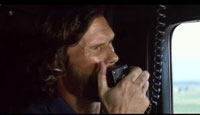
 Welcome to the Trucker Country CB Radio Guide. Truckers use CB Radios for a variety of reasons during the course of the day, whether they’re driving down the road or stopped, or for information, conversation, and entertainment. You’ll find plenty of resources to help you on this page – whether you’re looking for great prices on CB’s and/or accessories, or are new to the world of CB radios and just want more information.

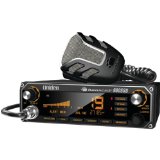
The CB Basics
Truck drivers are often talking with other drivers. They may be traveling together, or just passing or being passed by other truckers. Truckers also talk to other truckers going the other direction, but only for a brief time because of their CB radio’s limited signal range. In that time, they’ll learn important information about what’s happening in front of them (traffic, weather, emergency vehicles, etc).
Trucker CB Channels
Channel 19 is the trucker’s channel in most areas of the country. However, on the West Coast, channel 17 is occasionally used in some areas. In California, for instance, channel 19 is used on the north-south roads, and channel 17 is used on the east-west roads. This is frequently confused, though, so check both channels.
Using the Squelch
The squelch is the control gate for incoming signals. This control cuts off or eliminates receiver background noise (white noise) when you’re not receiving an incoming signal.
You can either set the squelch so that you receive all signals within your range, or so that you can only receive the strongest signals (usually those signals closest to you).
-
Turn the squelch control clockwise to
close the gate
and only allow the strongest signals to enter. -
Turn the control counterclockwise to
open the gate
and allow all signals to enter. - The desired squelch setting (DSS) is achieved by turning the control counter clockwise until you hear background noise, then turn the control clockwise just until the noise disappears. This is a good listening level.
If you’re having a conversation, and your signal’s getting weak, open the gate to be able to talk for a longer time.
Trucker CB Communications
Truckers need to communicate on the road for many different reasons: for casual conversation or exchanging important information with other drivers, emergency use, contacting truckstop/fuel desk on the scale, customers (shipper/receiver), or talking with official personnel (DOT weigh stations, other law enforcement). For the most part, this is all done on the trucker’s CB Radio.
For more information, Go to the Trucker CB Communications Page.